A skincare routine for combination skin requires precision and consistency. Combination skin combines oily zones, typically the forehead, nose, and chin, with drier or normal areas, often on the cheeks and jawline.
Improper care can lead to breakouts, flakiness, or irritation. The key is to balance hydration and oil control while using the right products for each area.
What Defines Combination Skin?
Combination skin is a unique skin type that presents multiple characteristics on one face. The T-zone often produces excess sebum, causing shine and occasional acne, while the cheeks, temples, and jawline may be dry, tight, or sensitive. Genetics, hormones, environmental factors, and diet all influence the degree of oiliness or dryness.
Example: A person may experience an oily forehead and nose in summer but dry cheeks in winter. This variability means that skincare products and steps need to adapt to both conditions simultaneously.
Oily T-Zone and Dry Cheeks Explained
The T-zone contains a higher concentration of sebaceous glands, which naturally produce more oil. Over-washing or using harsh products can worsen oiliness due to rebound sebum production.
Conversely, dry areas can become sensitive and inflamed if not hydrated properly. A successful skincare routine addresses both simultaneously, using targeted products for each zone.

Why Combination Skin Needs a Specialized Routine
Common Mistakes to Avoid
- Treating the face uniformly – Applying the same products to oily and dry areas can worsen imbalances.
- Over-exfoliating – Physical scrubs and strong chemical exfoliants can damage dry patches and increase sensitivity.
- Skipping moisturizer – Even oily zones need hydration to prevent the skin from overcompensating with excess oil.
How Skin Imbalance Affects Breakouts and Dryness
Combination skin that is improperly treated may experience:
- Excess oil and clogged pores in the T-zone can lead to blackheads or breakouts.
- Dry, flaky patches on the cheeks, causing irritation and uneven texture.
- Premature aging due toa lack of hydration in some areas, while others are overactive.
Using a balanced skincare routine ensures that each zone receives the care it needs without compromising the skin’s overall health.
Morning Skincare Routine for Combination Skin
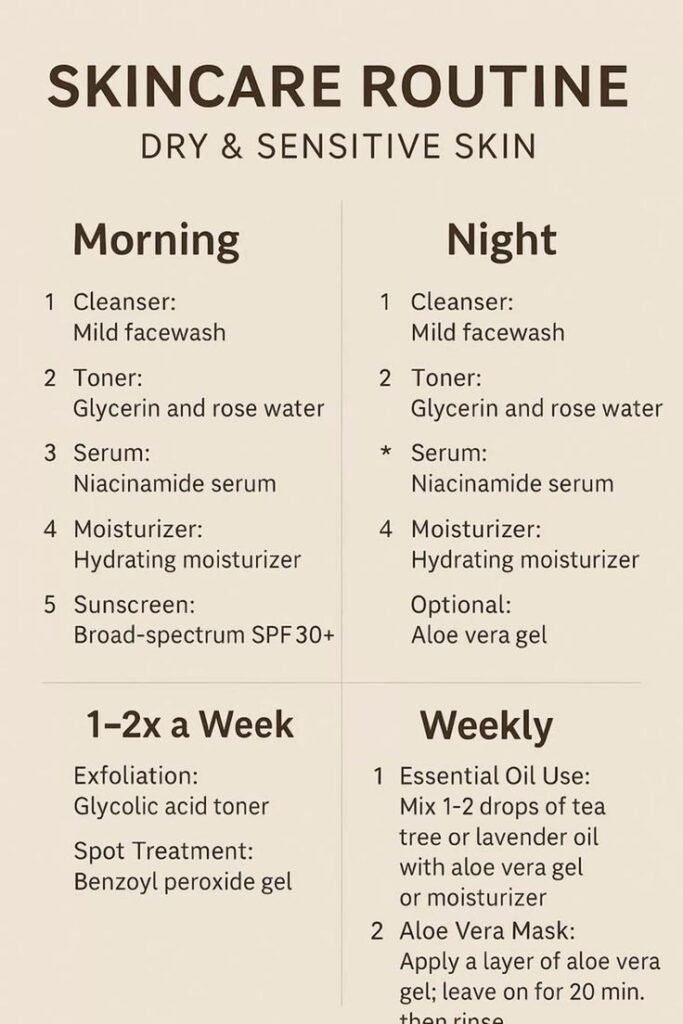
Gentle Cleanser for Combination Skin
Start the day with a low-pH, gentle cleanser. Gel or lotion-based cleansers remove excess oil from the T-zone while leaving drier areas hydrated. Avoid foaming cleansers with harsh sulfates that can strip moisture.
Tip: Massage in circular motions for 30–60 seconds and rinse with lukewarm water to preserve natural oils.
Toner for Combination Skin: Is It Necessary?
A toner can:
- Refine pores
- Restore pH balance
- Lightly hydrate dry patches
Choose alcohol-free toners with soothing ingredients like aloe vera or hyaluronic acid. They prepare the skin for moisturizers and sunscreen without drying the T-zone.
Lightweight Moisturizer for Combination Skin
Use a gel-cream or water-based moisturizer. This hydrates dry areas without making the T-zone greasy. Ingredients like glycerin, squalane, or niacinamide are ideal for combination skin.
Example: Apply slightly more product on dry cheeks and a thin layer on the oily T-zone.
Sunscreen for Combination Skin (Daily Protection)
Daily SPF protects against UV damage, premature aging, and inflammation. Opt for broad-spectrum SPF 30+, lightweight, and non-comedogenic formulas. Mineral sunscreens are often gentle on sensitive or dry patches.
Night Skincare Routine for Combination Skin
Cleansing After Sunscreen and Makeup
Even light SPF or makeup can clog pores overnight. Double cleansing with an oil-based cleanser followed by a gentle gel cleanser ensures complete removal of impurities while preserving hydration.
Exfoliation for Combination Skin
Exfoliate 1–2 times per week using chemical exfoliants like:
- AHAs (glycolic, lactic acid) for dry areas
- BHAs (salicylic acid) for oily T-zone
Avoid harsh scrubs, which can damage dry patches and disrupt the skin barrier.
Night Moisturizing and Barrier Repair
Nighttime is ideal for skin repair. Use:
- Slightly richer moisturizers for dry areas
- Lightweight gels for oily zones
- Ingredients like ceramides, peptides, and hyaluronic acid for barrier support
This approach balances moisture and prevents overnight oil overproduction.
Best Products for Combination Skin
How to Choose Products Without Over-Treating
Select products labeled for combination skin. Focus on hydrating the dry zones and controlling oil in the T-zone. Avoid using multiple strong active ingredients simultaneously, which can irritate or sensitize the skin.
Ingredient Types That Work Well
- Humectants: Hyaluronic acid, glycerin
- Lightweight oils: Squalane, jojoba oil
- Calming agents: Niacinamide, allantoin, panthenol
- Exfoliants (occasional): Salicylic acid for pores, lactic acid for hydration
Dermatologist-Approved Tips for Combination Skin
Seasonal Adjustments
- Summer: Light gels, water-based moisturizers, and mattifying sunscreen
- Winter: Slightly richer creams, hydrating serums, and gentle exfoliation
How to Care for Combination Skin Long-Term
Consistency is crucial. Follow a balanced, adaptable routine, and avoid changing products too frequently. Over time, this stabilizes oil production, maintains hydration, and reduces breakouts.

Frequently Asked Questions
What Is the Best Skincare Routine for Combination Skin?
A well-rounded routine cleanses, hydrates, protects, and treats each zone according to its needs. Adjust products and steps seasonally or based on skin reactions.
Should Combination Skin Use Oil-Free Products?
Not entirely. Dry zones still need nourishment. Focus on zone-specific application rather than full-face oil-free restriction.
How Often Should Combination Skin Be Exfoliated?
Once or twice per week is sufficient. Over-exfoliation increases sensitivity and disrupts the natural skin barrier.
Conclusion
A skincare routine for combination skin should prioritize balance, consistency, and adaptability. By:
- Using gentle cleansers
- Hydrating dry areas while controlling oil
- Applying sunscreen daily
- Exfoliating strategically
- Choosing dermatologist-approved products
One can achieve a healthier, radiant complexion with minimal irritation or breakouts. Combination skin requires attention to detail, but with the right steps and products, it can remain clear, hydrated, and balanced year-round.