CVC worksheets are one of the most widely used instructional tools in early literacy education because they focus on a child’s first real reading experience.
These worksheets introduce children to simple, decodable words that follow a predictable structure, making early reading less overwhelming and more successful.
When used consistently and correctly, CVC worksheets support phonics instruction, reinforce sound-letter relationships, and help learners transition from recognizing letters to reading words independently. Their simplicity makes them suitable for both structured classroom instruction and informal home learning environments.
What Are CVC Words?
Definition of CVC Words
CVC words are words made up of a consonant, followed by a vowel, and ending with another consonant. Each letter typically represents one sound, which allows children to sound out the word without relying on memorization.
Examples of CVC words include short, familiar words that children can easily connect to images or objects. This clear structure makes them ideal for beginners who are still learning how sounds work together in written language.
Why CVC Words Matter in Early Literacy
CVC words are often a child’s first exposure to blending sounds into complete words. Because the spelling patterns are consistent, children can focus on decoding rather than guessing.
Practicing CVC words also helps children understand that words are made up of individual sounds placed in a specific order. This understanding becomes the foundation for more advanced reading skills later on.
What Are CVC Worksheets?
Purpose of CVC Worksheets
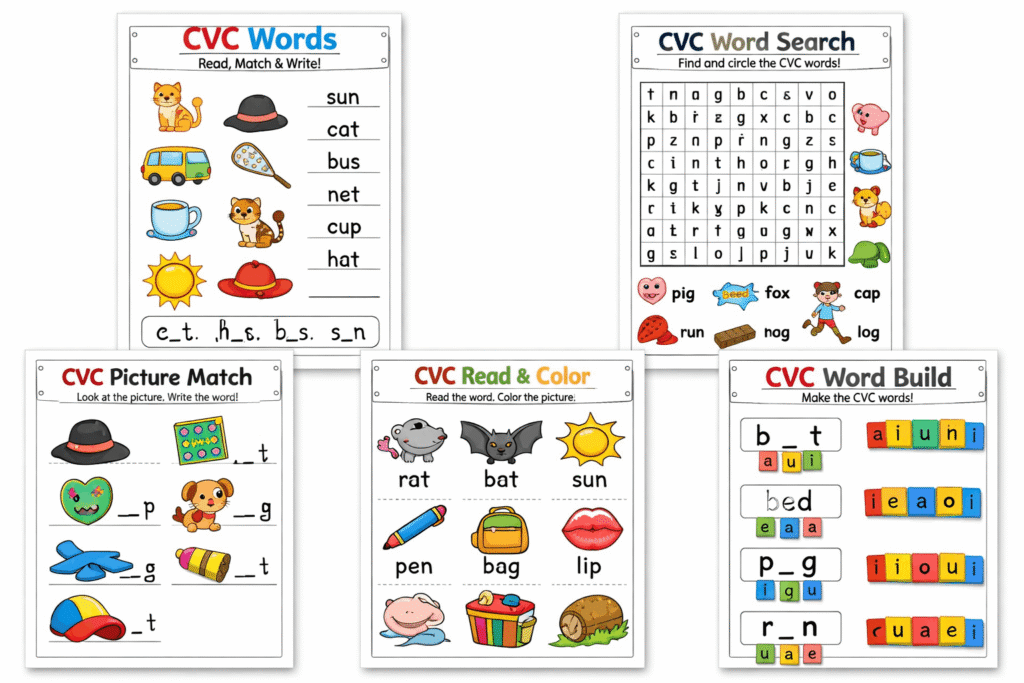
CVC worksheets are designed to give children repeated, structured practice with CVC words. They typically include activities such as matching pictures to words, filling in missing letters, or reading simple word lists.
The purpose of these worksheets is not just repetition, but reinforcement. Each activity strengthens a specific skill, such as identifying beginning sounds or blending all three sounds together smoothly.
Skills Developed Through CVC Worksheets
Through regular use, CVC worksheets help children develop phonemic awareness, early decoding skills, spelling accuracy, and visual word recognition. They also improve concentration and task completion, which are important for classroom readiness.
Over time, children begin to recognize CVC words more quickly, reducing the mental effort required for reading and allowing them to focus on comprehension.
Benefits of Using CVC Worksheets for Young Learners
Phonics and Sound Blending Skills
CVC phonics worksheets break words down into individual sounds and then guide children through blending them back together. This process teaches learners how sounds interact rather than treating words as whole units.
Blending practice is essential for decoding unfamiliar words later, making these worksheets an important step in phonics-based reading programs.
Reading Confidence and Fluency
CVC reading worksheets allow children to experience early success. Because the words are short and predictable, learners are more likely to read them correctly, which builds confidence.
As confidence grows, children are more willing to attempt new words and engage with reading activities independently.
Spelling and Word Recognition
CVC spelling worksheets help children understand that spelling is connected to sounds. By listening for each sound and writing the corresponding letter, learners strengthen both spelling and reading skills.
Repeated exposure also improves automatic recognition of common CVC words, which supports reading fluency.
Types of CVC Worksheets
Printable CVC Worksheets
Printable CVC worksheets are commonly used because they are easy to access and adaptable to different teaching styles. Teachers and parents can select specific worksheets based on a child’s needs and print them as needed.
They are especially useful for offline learning environments or hands-on activities.
CVC Worksheets PDF Format
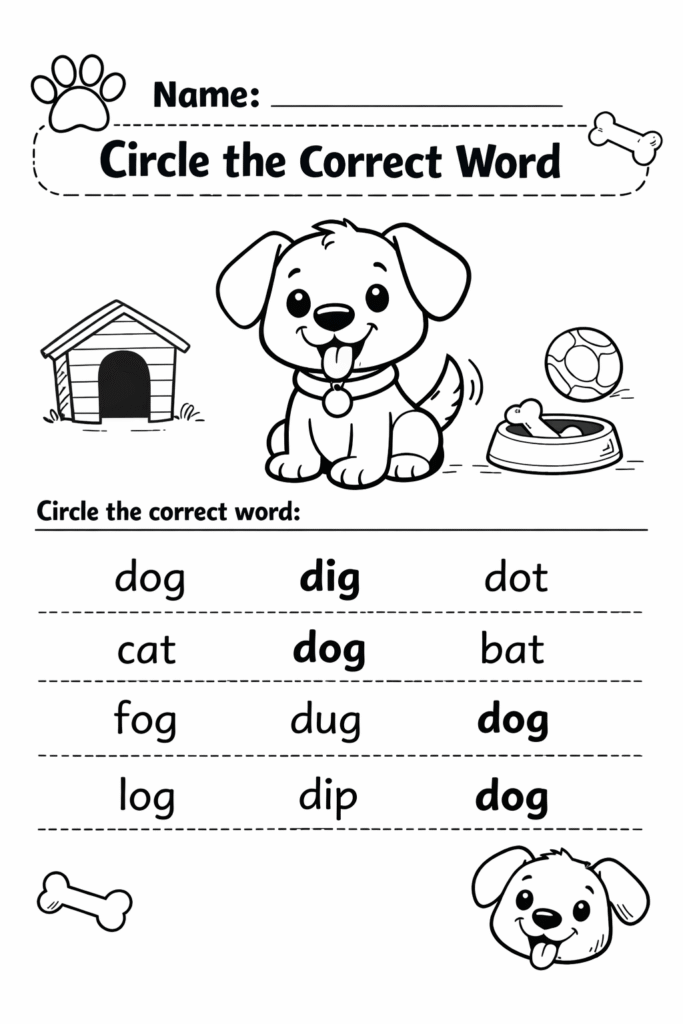
CVC worksheets PDF versions offer consistency in layout and quality. They are easy to store digitally and can be printed multiple times without degradation.
PDF formats are often preferred for classroom use because they ensure uniformity across multiple learners.
CVC Blending Worksheets
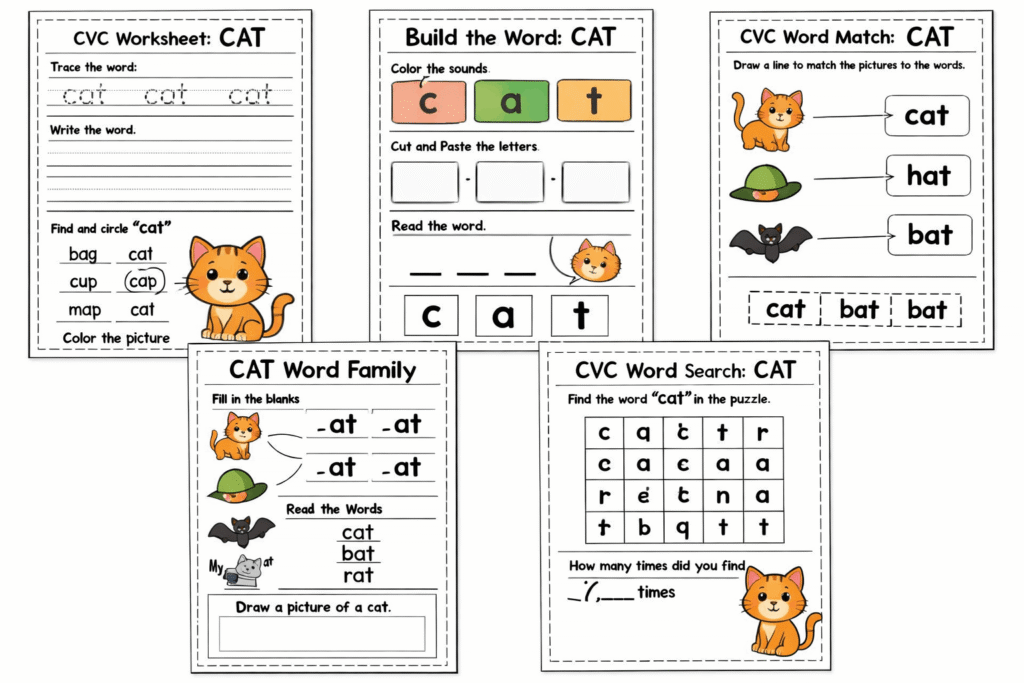
CVC blending worksheets focus specifically on the process of combining sounds. Activities may include sliding sounds together or reading segmented words before blending them into a complete word.
These worksheets are particularly helpful for children who struggle with transitioning from letter sounds to whole words.
CVC Reading Worksheets
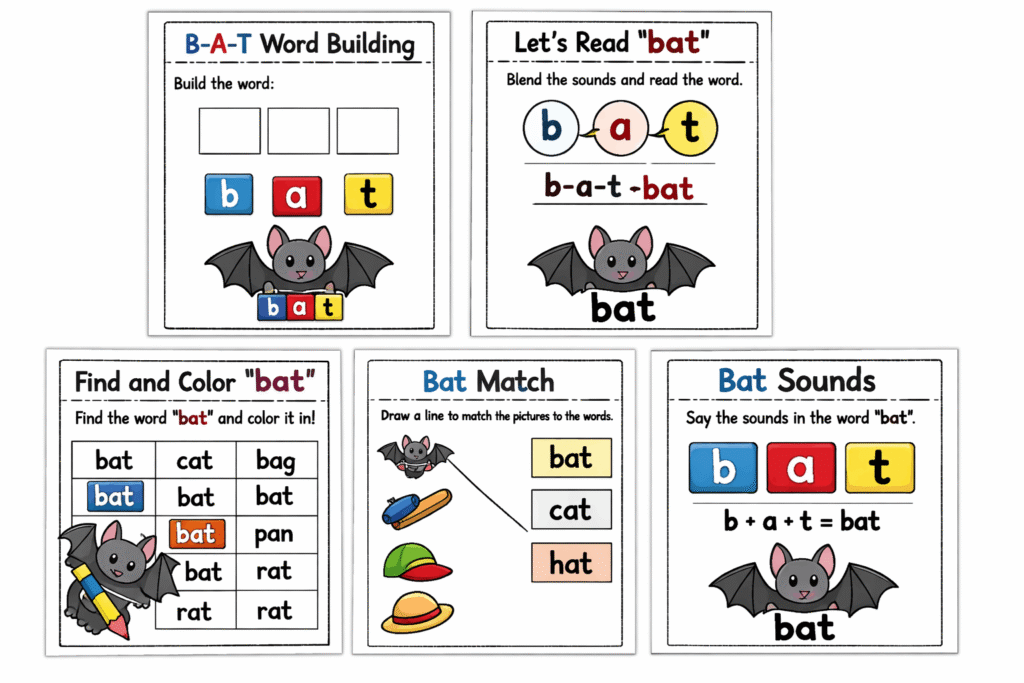
CVC reading worksheets provide opportunities to read words in isolation or within simple sentences. This helps children understand how words function in context, not just as standalone items.
Reading-focused worksheets often support comprehension by pairing words with images or simple prompts.
CVC Phonics Worksheets
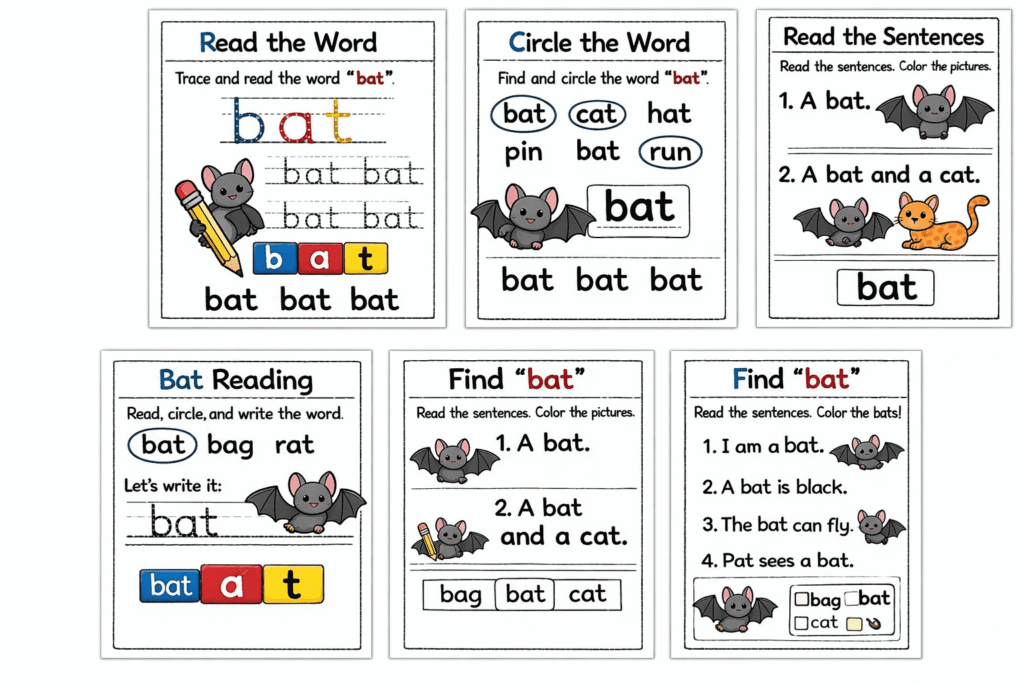
CVC phonics worksheets emphasize sound-letter relationships. They often include exercises that isolate beginning, middle, or ending sounds, reinforcing phonics instruction.
These worksheets work best when paired with direct phonics teaching or oral sound practice.
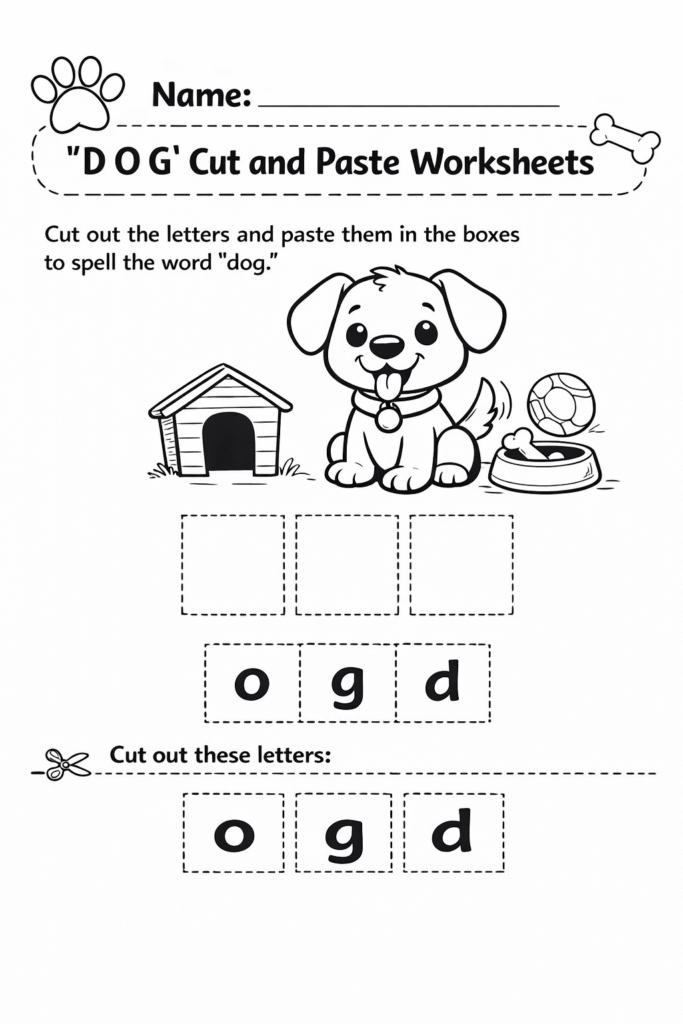
CVC Cut and Paste Worksheets
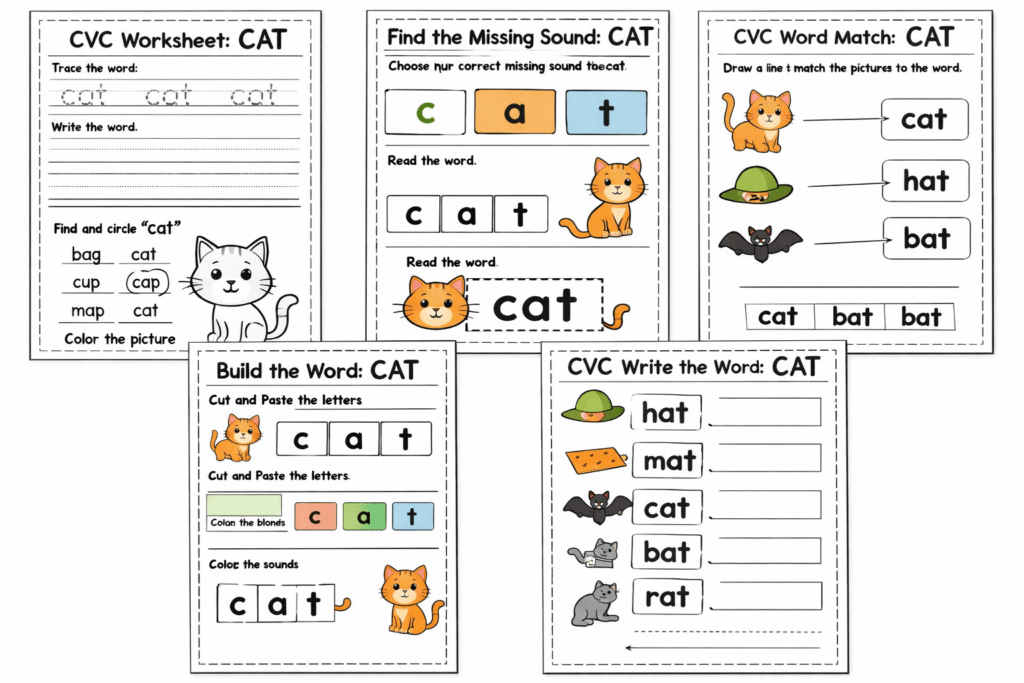
CVC cut-and-paste worksheets introduce a tactile element to learning. Children physically manipulate word parts or pictures, which can improve engagement and fine motor skills.
This type of worksheet is especially effective for younger learners who benefit from hands-on activities.
CVC Word Families Worksheets
CVC word families worksheets group words with the same ending sound, such as words that share “-at” or “-op.” This helps children recognize spelling patterns and build decoding speed.
Understanding word families also prepares learners for more complex phonics patterns later on.
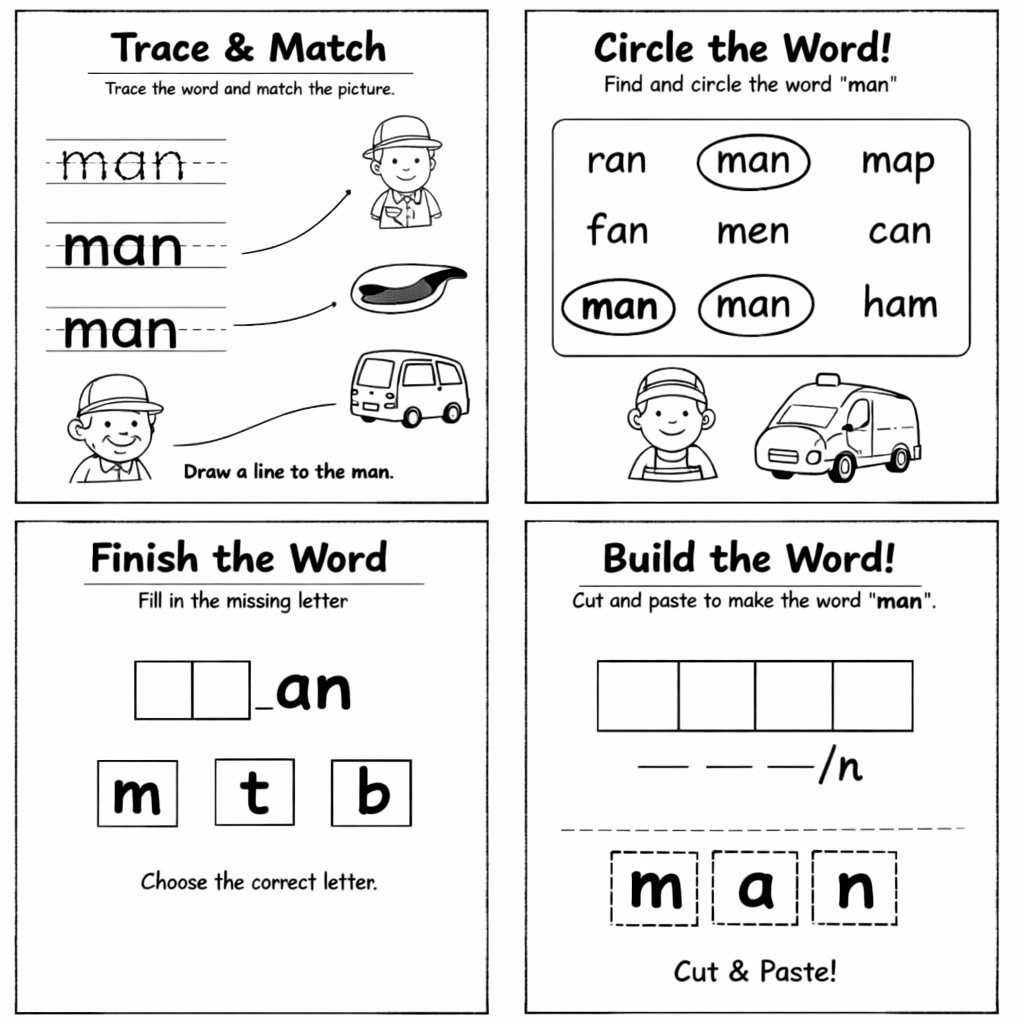
CVC Spelling Worksheets
CVC spelling worksheets encourage children to listen carefully to sounds and reproduce them in writing. These activities reinforce the connection between spoken and written language.
Spelling-focused practice also supports early writing development.
CVC Worksheets by Grade Level
CVC Worksheets for Preschool
CVC worksheets for preschool focus on sound recognition and visual matching rather than independent reading. Activities often include identifying pictures that match spoken words or tracing letters.
These worksheets introduce phonics concepts gently without overwhelming young learners.
CVC Word Worksheets for Kindergarten
CVC word worksheets for kindergarten introduce more structured reading and spelling tasks. Children begin blending sounds independently and reading simple words with minimal support.
At this stage, worksheets often serve as reinforcement alongside phonics lessons.
CVC Worksheets for First Grade
CVC worksheets for first grade typically include more advanced tasks, such as reading short sentences or completing word-based exercises independently.
These worksheets help solidify decoding skills and support reading fluency development.
Free vs Paid CVC Worksheets
When Free CVC Worksheets Are Enough
Free CVC worksheets are useful for occasional practice, review sessions, or supplemental learning. They are often sufficient for parents supporting reading at home.
However, quality and progression can vary depending on the source.
Advantages of Structured Paid Resources
Paid CVC worksheets usually follow a carefully planned skill sequence. This structured approach ensures that children build skills gradually and consistently.
Many paid resources also include assessments or progress tracking, which can be valuable for educators.
How to Use CVC Worksheets Effectively
At Home Learning Strategies
At home, short and focused practice sessions work best. Using CVC worksheets for a few minutes at a time helps maintain attention and prevents frustration.
Parents can enhance learning by reading words aloud together and discussing pictures.
Classroom and Small Group Use
In classrooms, CVC worksheets are often used during literacy centers or small group instruction. Teachers can differentiate worksheets based on student ability levels.
This targeted use allows learners to practice specific skills while receiving guided support.
Common Mistakes to Avoid
Relying solely on worksheets without interactive reading or oral practice can limit progress. Worksheets should support instruction, not replace it.
Balancing worksheets with reading aloud and phonics games creates a more effective learning experience.
How to Choose the Right CVC Worksheets
Matching Worksheets to Skill Level
Selecting worksheets that match a child’s current reading ability is essential. Worksheets that are too difficult can discourage learners, while overly simple ones may slow progress.
Regular assessment helps ensure appropriate worksheet selection.
Visual Design and Engagement
Clear fonts, simple layouts, and supportive images improve usability. Overly cluttered worksheets can distract young learners and reduce effectiveness.
Engaging design encourages children to stay focused and complete tasks.
Progression and Skill Scaffolding
High-quality CVC worksheets follow a logical progression from simple recognition to independent reading and spelling. This scaffolding supports steady skill development.
Gradual progression also helps identify learning gaps early.
Frequently Asked Questions About CVC Worksheets
What age should start using CVC worksheets?
Most children begin using CVC worksheets between four and six years old, depending on their readiness and exposure to letter sounds.
How many CVC worksheets should a child do per day?
Completing one or two well-chosen worksheets per session is usually enough. Quality practice is more effective than quantity.
Are CVC worksheets enough to teach reading?
CVC worksheets are an important tool, but they work best alongside phonics instruction, reading practice, and interactive learning activities.