Many people search Should I do skincare before or after shower because skincare advice online often feels contradictory. Some routines suggest cleansing before showering, while others emphasize post-shower application. The truth is that skincare timing plays a crucial role in hydration, product absorption, and long-term skin health.
This guide breaks down the science behind showering and skincare, explains dermatologist-recommended practices, and helps determine the best timing based on routine, skin type, and lifestyle.

Why the Timing of Skincare Matters
How showering affects the skin barrier
The skin barrier is responsible for retaining moisture and protecting against external irritants. During a shower, especially with warm or hot water, natural oils on the skin are temporarily stripped away.
While this cleansing effect is beneficial, it can also increase transepidermal water loss if skincare is delayed afterward. This is why understanding when to do skincare routine steps is essential. Applying products at the right time helps restore the skin barrier before moisture escapes.
The role of steam, heat, and pores
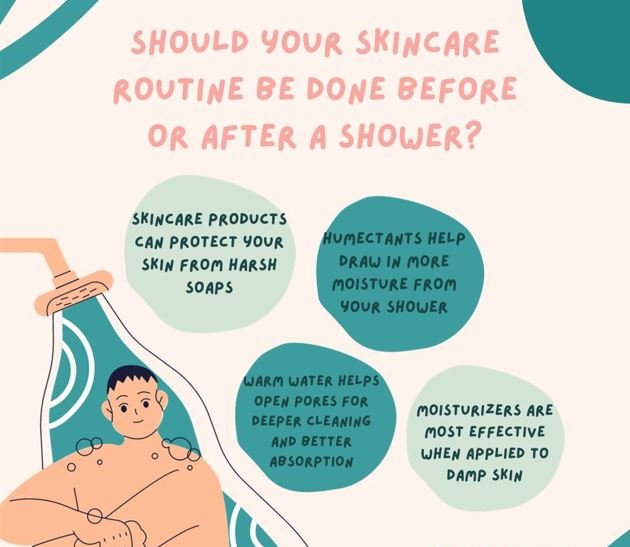
Steam and warmth soften the outermost layer of the skin, allowing ingredients to penetrate more effectively. Contrary to popular belief, pores do not physically “open,” but heat does make skin more receptive. This makes post-shower skincare particularly effective for hydration and treatment products.
Should Skincare Be Done Before or After a Shower?
For most people, skincare should be done after a shower. Clean skin without sweat, oil, or environmental residue allows products to absorb evenly and perform as intended.
Dermatologist consensus on skincare timing
Dermatologists consistently recommend a shower beforea skincare routine, especially for routines involving serums, moisturizers, or active ingredients. Post-shower application reduces irritation and maximizes ingredient efficacy.
Skincare Routine After Shower (Best Practice)
Why post-shower skincare is most effective
After showering, the skin is slightly damp and warm, which enhances penetration of hydrating and reparative ingredients. Applying products within a few minutes helps seal in water and prevent dryness caused by evaporation.
This is why a structured skincare routine after a shower is widely considered the gold standard.
Ideal skincare order after shower
Cleanser: If the face was not cleansed during the shower, a gentle facial cleanser should be used immediately after. This removes residual sweat or impurities without disrupting moisture balance.
Toner: Toner helps rebalance the skin’s pH and lightly hydrates, creating a smoother base for serums.
Serum: Serums deliver concentrated ingredients such as hyaluronic acid, niacinamide, or antioxidants. These penetrate best on freshly cleansed, post-shower skin.
Moisturizer: Moisturizer locks in hydration and repairs the barrier weakened by water exposure.
Sunscreen (morning): In the morning, sunscreen must always be the final step. Applying it after moisturizing ensures even coverage and proper protection.
Skincare Routine Before Shower (When It Makes Sense)
Situations where pre-shower skincare is useful
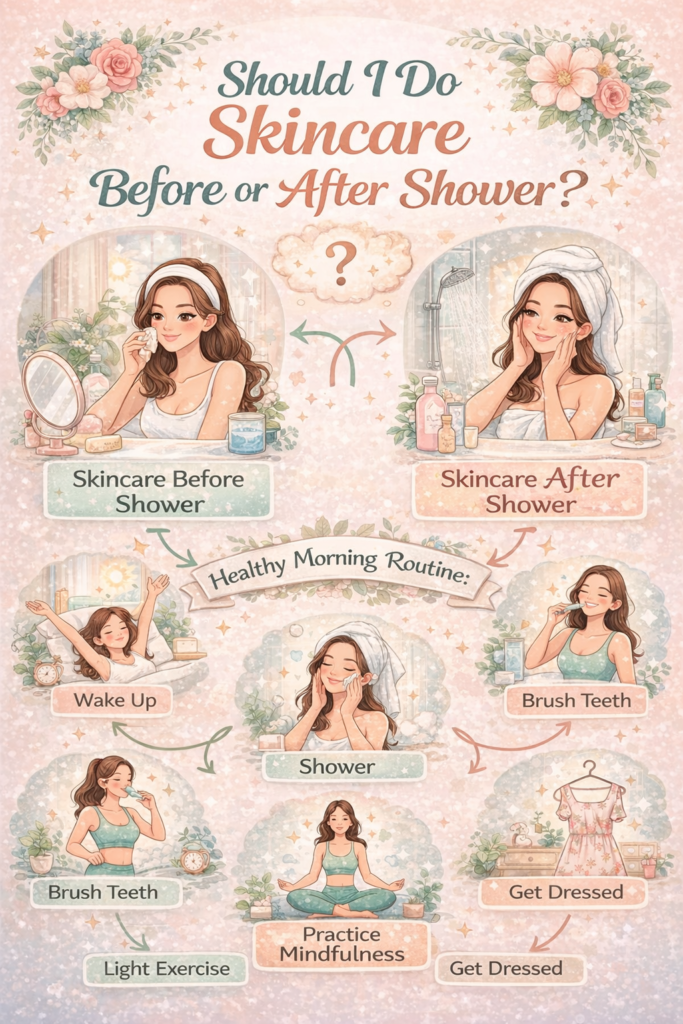
Although post-shower skincare is ideal, there are limited situations where a skincare routine before shower may be beneficial. These include removing heavy makeup, sunscreen buildup, or using oil cleansers that break down impurities before rinsing.
Products are safe to use before showering.
Cleansing oils, balm cleansers, and pre-wash exfoliating treatments can be used safely before showering, as they are designed to be rinsed away.
Face Wash Before or After Shower — What’s Better?
Washing face in the shower: pros and cons
Washing the face in the shower can be convenient, but it often leads to using water that is too hot for delicate facial skin. This may worsen dryness or sensitivity over time.
Best water temperature for facial skin
Lukewarm water is best for cleansing the face. If choosing between face wash before or after a shower, washing afterward allows better temperature control and gentler cleansing.
Morning Skincare — Before or After Shower?
Morning routine timing
For most routines, morning skincare before or after a shower works best when done afterward. Morning skincare focuses on protection, and applying antioxidant serums and sunscreen to clean, post-shower skin improves effectiveness.
Common mistakes to avoid
A common mistake is waiting too long after showering. Skincare should be applied while the skin is still slightly damp to prevent moisture loss.
Night Skincare — Before or After Shower?
How night routines differ
Nighttime skincare focuses on repair and regeneration. Applying products after showering allows ingredients like retinoids and barrier-repair creams to work efficiently.
Post-shower night routine example
A gentle cleanse, followed by a treatment serum and moisturizer, works best when applied shortly after showering. This ensures even absorption and reduced irritation.
Skincare After Hot Shower: What to Watch Out For
Managing dryness and sensitivity
Hot showers increase water loss and may trigger redness. After a hot shower, it is important to moisturize promptly and avoid strenuous activities for a short period.
Cooling-down tips for healthy skin
Allow the skin to cool for one to two minutes before applying potent treatments. This reduces sensitivity while still benefiting from improved absorption.
Best Time to Do Skincare Based on Skin Type
Oily skin: Lightweight gels and serums absorb best when applied immediately after showering, helping control excess oil.
Dry skin: Rich creams and occlusives should be applied quickly post-shower to lock in hydration.
Combination skin: Different areas may need different products, but post-shower application remains the most effective timing.
Sensitive skin: Gentle, fragrance-free products should be applied after showering, avoiding harsh ingredients immediately after heat exposure.

Dermatologist-Recommended Skincare Routine Tips
Product absorption timing
Products absorb best within five minutes of showering. This window helps trap moisture and improve ingredient performance.
Layering rules that actually work
Applying products from thinnest to thickest ensures even absorption and prevents pilling or irritation.
Frequently Asked Questions
Should you wash your face in the shower?
It is acceptable if lukewarm water is used and gentle cleansers are chosen.
Can skincare products be applied to wet skin?
Hydrating products perform better on slightly damp skin, while treatment products may require skin to be mostly dry.
How long after a shower should skincare be done?
Ideal, within five minutes for optimal hydration and barrier repair.
Conclusion
For most people, the answer to Should I do skincare before or after a shower is clear. Skincare should be done after showering to maximize hydration, absorption, and long-term skin health. Applying products at the right time helps maintain a strong skin barrier and improves overall results.